
Which Reflow Oven Size Do You Need?
2023-09-20
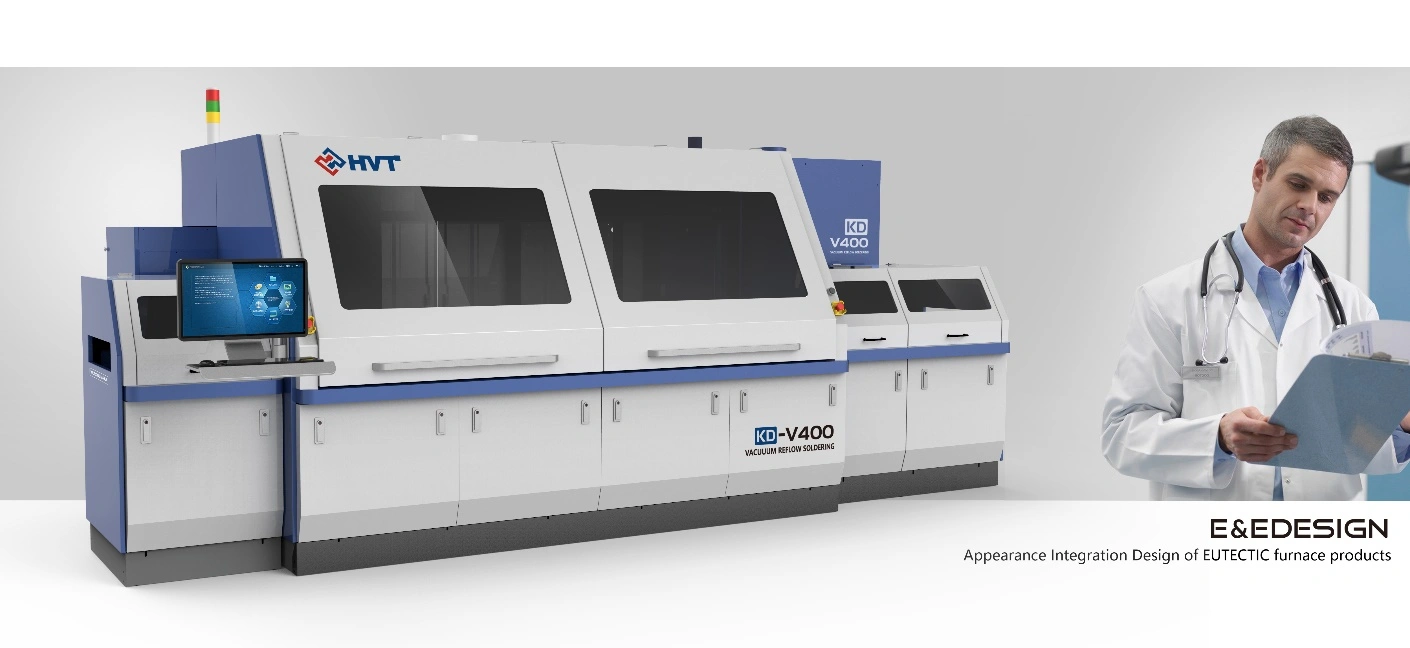
It's common for electronic assemblers to believe that a longer reflow oven will be necessary to meet their throughput requirements and control the solder profiles more precisely, especially if they are using lead-free solders. As a result, many manufacturers find themselves spending more money—and sacrificing more floor space—than they really need to.
In a high-volume manufacturing environment, long, eight- to 10-zone ovens and faster belt speeds may be the best solution, but from our experience, shorter reflow ovens can easily keep up with the vast majority of medium- to low-volume, high-mix assembly lines in the U.S. (and many other countries). Many of our best sellers are smaller, simpler, and more affordable 4- to 6-zone models, which excel at handling pick and place throughput, meeting solder paste reflow specifications, and providing reliable, high-quality soldering.
A few simple calculations based on data from your solder paste and equipment suppliers will give you an idea of how much volume a 4-, 5-, or 6-zone oven can handle:
Solder Paste Heating Time
As a first step, you should check the recommended profiles for the paste formulas you intend to use from your solder paste manufacturer. For the various stages of the reflow profile, solder paste manufacturers generally provide a fairly wide window of time (in terms of total heating time) — 120 to 240 seconds for preheat and soak, 60 to 120 seconds for reflow and time above liquid. For these calculations, any differences between eutectic and lead-free solders are usually negligible due to their similar heating times. We find a good, relatively conservative estimate of total heating time to be 4 to 412 minutes (240 to 270 seconds) given this range (3 to 5 minutes).
The cooling portion of solder profiles should be ignored in this simple calculation. While cooling is important, it typically does not affect soldering quality unless the PCB is cooled too quickly. Handling issues may result if the PCB is not cooled quickly enough. In high-volume production environments with larger ovens and faster belt speeds, controlled cooling may be necessary, but 4- to 6-zone ovens with passive cooling are more than adequate.
Heated Length of Reflow Oven
The next consideration is the total heated length of the reflow oven. It is very important to distinguish between the oven's overall overall length and its heated length. In the specifications, most oven manufacturers will specify how long the oven will be heated, which is also known as the heating tunnel length. For each oven you will be evaluating, determine the length (in inches). It is recommended that you do not include the length of any cooling zones - we are only interested in the areas of the oven that are heated.
Belt Speed
The belt speed you'll need to achieve that profile depends on the heated length (in inches) divided by the total heating time (in seconds).

In the case of a 6-zone reflow oven with an 8034-inch tunnel, you would divide 80.7 inches by 240 and 270 seconds if your solder heating time is 240-270 seconds. The belt speed of the oven should be set between 17.9 and 20 inches per minute if you multiply this by 60 seconds.
Maximum Number of Reflowed Boards Per Minute
The maximum throughput can be calculated by assuming the reflow oven's conveyor can load boards end to end at full capacity.

As an example, if your PCB measures 7 inches in length, and the 6-zone reflow oven's belt speed falls within the range of 17.9 to 20.2 inches per minute, the oven's maximum throughput will be approximately 2.6 to 2.9 boards per minute. This implies that a soldered assembly will exit the oven approximately every 20 seconds. This perspective allows you to assess whether your pick and place machine is capable of delivering PCBs at a rate of approximately 20 seconds per board. Additionally, you can observe that minor fluctuations in heating times and belt speed are unlikely to significantly impact the oven's overall throughput.
Line Speed
As you choose your new oven, you must take into consideration the overall speed of your production line. Whatever process (stencil printing, SPI, pick and place, pre-reflow inspection, etc.) takes the longest will ultimately determine your overall throughput.
Our fastest high-mix pick and place machine with 3 heads is capable of handling approximately 10,500 components per second in a fully conveyorized line. Our pick and place system typically dictates line speed in a fully conveyorized line. Using a three-stage conveyor, PCBs are loaded and unloaded automatically in between 10-15 seconds at a minimum. The pick and place operation (including transport) will take at least 20 seconds, even if the 7" long PCB has only 30 components.Formula to calculate the speed of your pick and place machine.
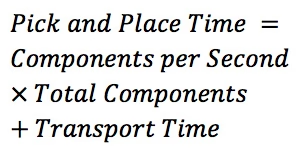
Of course, a 7" long PCB with only 30 SMDs would probably be quite rare, but again this is only an example to illustrate the relative ease with which a reflow oven can keep pace with production needs. Even smaller boards with fewer components are likely to be panelized which would increase the total number of placements and the total time for the pick and place process.
How to Choose the Right Reflow Oven?
Using these numbers, you can visualize the flow of different products through your SMT factory when using different oven sizes. The oven selection process isn't meant to be overly simplified — this is just a starting point, and many other factors must be taken into account as well. A double-sided board may require two separate oven passes for production. A factory's capacity for reflow soldering will also be affected by offline processes and manual assembly operations. The largest oven in the world won't help you much if your SMT assembly speeds are very fast, but other processes limit the throughput. Changeover time between products is another factor to consider. When switching from one profile to another, how long does it take for the oven temperature to stabilize? Several factors need to be considered.
As we mentioned at the beginning of this post, most of our customers find that 5- to 6-zone ovens are more than sufficient to accommodate their needs, and are often quite surprised by this. In anticipation of increased throughput in the future, companies sometimes overspend on larger ovens. Those who fall into this category should keep in mind that smaller ovens use less energy, require less space, and often have a lower base price. This allows them to free up funds for options and accessories such as nitrogen blankets, water-cooled cooling, and/or thermal profiling. For greater flexibility in running multiple temperature profiles simultaneously, customers have even chosen to purchase multiple smaller ovens rather than a single large oven.
We can supply you with a larger, 8- or 10-zone, higher-capacity oven if you need it. You can use these quick calculations to get you in the ballpark. If you’re like most of our customers, we think a 5- or 6-zone oven will do just fine for you. Feel free to contact a HVT SMT assembly equipment expert if you have any questions after running through these calculations.
Reducing Voiding with Continuous Vacuum Reflow
A Guide to Creating an Effective Process for Reflowing Formic Acid
Related Article

Explore laser packaging process routes for LiDAR and optoelectronics. Discover how vacuum eutectic soldering secures sub-micron alignment stability.
Laser Diode Packaging Technologies: From TO-Can to Silicon Photonics

Compare inline vs. batch vacuum soldering systems. Learn how vacuum reflow ovens optimize void-free welding for high-power semiconductor packaging.
Vacuum Soldering Process & Equipment Comparison: How to Achieve Automotive-Grade Low-Void Manufacturing

