
Reflow Ovens for Solder Paste and Pcb Assembly
2023-10-26
In many holiday movies, there's a recurring theme that often unfolds - the unfortunate individual who accidentally ruins the holiday meal in the oven. You've likely witnessed these scenes: billowing smoke emerging from the oven, disappointed family members resorting to ordering pizza, and all that remains are charred remnants where a splendid turkey, ham, casserole, or dessert should have been. This happens because ovens generate a substantial amount of heat, and if handled carelessly, they can lead to a culinary catastrophe.
Now, imagine that this oven isn't your typical kitchen appliance, but an industrial-grade version used for reflowing solder on printed circuit boards (PCBs). In this context, it becomes even more crucial to understand its proper usage.
These industrial reflow ovens, which are employed to solder components onto PCBs, are intricate devices. They employ a combination of radiated heat and convection to provide a precisely controlled, uniform heat supply to the PCB. This critical process finalizes the assembly of the PCB by melting the solder, forming robust and reliable solder joints between the components and the board. Let's delve into how these reflow ovens are employed in this process and explore what designers need to be aware of to ensure a seamless operation.
Now, imagine that this oven isn't your typical kitchen appliance, but an industrial-grade version used for reflowing solder on printed circuit boards (PCBs). In this context, it becomes even more crucial to understand its proper usage.
These industrial reflow ovens, which are employed to solder components onto PCBs, are intricate devices. They employ a combination of radiated heat and convection to provide a precisely controlled, uniform heat supply to the PCB. This critical process finalizes the assembly of the PCB by melting the solder, forming robust and reliable solder joints between the components and the board. Let's delve into how these reflow ovens are employed in this process and explore what designers need to be aware of to ensure a seamless operation.
Introduction to the Solder Reflow Oven
Electronic components can be affixed to a printed circuit board through several distinct techniques. The traditional approach involves manual soldering, where a skilled technician employs a soldering iron to painstakingly work on each connection separately. For large-scale production, PCB assemblers opt for wave soldering systems or automated selective soldering methods tailored to specific applications. Nonetheless, the most prevalent technique for mass-producing soldered components is the solder reflow process, predominantly used for affixing surface-mount components to the PCB.
The solder reflow process commences by first applying solder paste to all the surface-mount pads on the PCB. Subsequently, components are positioned on these pads, and the solder paste acts as an adhesive, keeping them in place until they are securely soldered. We'll delve further into the intricacies of solder paste and its function shortly. With components now in their designated locations, the PCB is conveyed through a solder reflow oven.
An industrial solder reflow oven boasts multiple heat zones, each meticulously controlled to maintain precise temperatures based on a user-defined thermal profile programmed into the system. As the PCB progresses through the oven on a conveyor belt, the time it spends in these diverse zones is also governed by the thermal profile. The solder reflow process typically adheres to the following sequence:
- Preheat: In this way, the board will reach its first temperature target.
- Soak: After reaching the first temperature, the board will be left there for a predetermined period of time, which will activate the flux in the solder paste to remove the oxides.
- Reflow: In the next step, the board is heated again to melt the solder, or it is reflowed.
- Cooling: Now that the solder joints have been formed, the board goes through a controlled cooling cycle to solidify them.

What Is Solder Paste?
As previously noted, we've discussed the role of solder paste in securing components to the board as it traverses the solder reflow oven. However, solder paste serves a more multifaceted role than mere adhesion. Solder paste is a composite blend of metallic solder particles and an adhesive flux with a paste-like texture. Given its distinctive composition, solder paste fulfills three distinct yet crucial functions throughout the solder reflow process:
- Adhesion: The inherent stickiness of the paste plays a crucial role in temporarily securing surface mount components in place until the solder reflows, creating a permanent bond.
- Flux: This serves as a chemical cleanser, preparing the metal surfaces by removing oxides and impurities before soldering. Additionally, it enhances the soldering process by facilitating the wetting of the molten solder, while also safeguarding the metal surfaces from re-oxidation during the soldering process.
- Solder: These are the metallic particles that, upon melting, fuse the leads of a component with their corresponding pads on the circuit board. Due to its lower melting point compared to the metals it joins, solder forms robust connections without causing any damage to the board or the components.
Solder paste is typically deposited onto the board through one of two methods: screen printing using a stencil or jet printing. Jet printers are frequently employed in prototype runs, as they eliminate the time and cost involved in creating a stencil. However, when a circuit board enters full-scale production, stenciling is often the preferred choice due to its ability to swiftly apply solder paste to the board. In cases where rework is necessary, solder paste can also be manually applied using a syringe.
Best PCB Design Practices for Solder Reflow
Reflow soldering is the preferred method for mass-producing surface mount boards, but it requires specific design practices to ensure success:
- Pad Size: It's crucial to design surface mount land patterns with the correct pad size. Undersized pads may lead to subpar solder joints during reflow. Conversely, oversized pads can result in component misalignment, clearance issues, or even accidental short circuits.
- Balanced Traces: Maintaining balance in the metal traces connecting the pads of smaller two-pin surface mount components is essential. Imbalanced traces can lead to uneven heating, causing solder to reflow faster on one pad than the other. This condition can result in "tombstoning," where one side of the component is pulled into a standing position instead of soldering flat, as required.
To prevent these issues, it's advisable to configure the design and manufacturing rules within your PCB design tools to align with best practices. Your tools should offer flexibility in setting various rules and constraints, encompassing pad sizes, trace widths, and clearances.
Reflow Oven for PCB ---KD-V3/V5
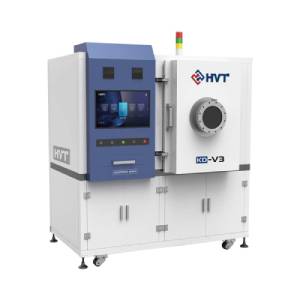
The KD-V3/V5 Vacuum Reflow Oven is an advanced solution in the field of soldering, designed for various applications from prototype runs to full-scale production. These reflow ovens are equipped with state-of-the-art features and precise control mechanisms.
One standout feature is the heating platform, consisting of a 3-layer metal structure with an integrated water-cooled design. Each layer is equipped with shield plate insulation, ensuring that they do not interfere with each other. This design allows for simultaneous operation of multiple layers, which is a valuable advantage for efficient and high-throughput soldering processes.
Temperature control in the KD-V3/V5 is a paramount focus, with a temperature control system and a PLC for precise regulation. The temperature range spans from room temperature to 400°C, with a remarkably low deviation of ≤±1°C and evenness of ≤±1%. This ensures that solder reflow occurs with exceptional accuracy and consistency.
Moreover, the vacuum system in these reflow ovens provides a high vacuum speed of 90 m³/h, achieving a minimum vacuum level of below 10Pa, thanks to the mechanical pump. This level of vacuum control is crucial for achieving high-quality soldering outcomes.
In terms of gas compatibility, the KD-V3/V5 supports nitrogen and formic acid (HCOOH), providing a controlled atmosphere to meet the specific requirements of various soldering applications. This flexibility in gas control is a key advantage in ensuring the ideal conditions for soldering.
The chambers of these reflow ovens are thoughtfully designed, with each layer's heating platform reaching a height of 100mm. Additionally, the chambers feature watch windows, allowing for visual monitoring of the soldering process.
The power specifications are robust, with the V3 model rated at 45 KW and the V5 model at 70 KW, while the working power levels are 30 KW and 45 KW, respectively.
In summary, the KD-V3/V5 Vacuum Reflow Oven is a cutting-edge solution that excels in providing precise and controlled solder reflow processes. Its ability to accommodate different gases, its superior temperature control, and the efficiency gained from the multi-layer heating platform make it an ideal choice for high-quality soldering operations, from small-scale prototypes to large-scale production.
One standout feature is the heating platform, consisting of a 3-layer metal structure with an integrated water-cooled design. Each layer is equipped with shield plate insulation, ensuring that they do not interfere with each other. This design allows for simultaneous operation of multiple layers, which is a valuable advantage for efficient and high-throughput soldering processes.
Temperature control in the KD-V3/V5 is a paramount focus, with a temperature control system and a PLC for precise regulation. The temperature range spans from room temperature to 400°C, with a remarkably low deviation of ≤±1°C and evenness of ≤±1%. This ensures that solder reflow occurs with exceptional accuracy and consistency.
Moreover, the vacuum system in these reflow ovens provides a high vacuum speed of 90 m³/h, achieving a minimum vacuum level of below 10Pa, thanks to the mechanical pump. This level of vacuum control is crucial for achieving high-quality soldering outcomes.
In terms of gas compatibility, the KD-V3/V5 supports nitrogen and formic acid (HCOOH), providing a controlled atmosphere to meet the specific requirements of various soldering applications. This flexibility in gas control is a key advantage in ensuring the ideal conditions for soldering.
The chambers of these reflow ovens are thoughtfully designed, with each layer's heating platform reaching a height of 100mm. Additionally, the chambers feature watch windows, allowing for visual monitoring of the soldering process.
The power specifications are robust, with the V3 model rated at 45 KW and the V5 model at 70 KW, while the working power levels are 30 KW and 45 KW, respectively.
In summary, the KD-V3/V5 Vacuum Reflow Oven is a cutting-edge solution that excels in providing precise and controlled solder reflow processes. Its ability to accommodate different gases, its superior temperature control, and the efficiency gained from the multi-layer heating platform make it an ideal choice for high-quality soldering operations, from small-scale prototypes to large-scale production.
Reflow Soldering: A Comprehensive Guide to Electronics Assembly
IGBT packages and solder paste layer voids - what's the connection?
Related Article

Explore laser packaging process routes for LiDAR and optoelectronics. Discover how vacuum eutectic soldering secures sub-micron alignment stability.
Laser Diode Packaging Technologies: From TO-Can to Silicon Photonics

Compare inline vs. batch vacuum soldering systems. Learn how vacuum reflow ovens optimize void-free welding for high-power semiconductor packaging.
Vacuum Soldering Process & Equipment Comparison: How to Achieve Automotive-Grade Low-Void Manufacturing

