
What Temperature Does a Circuit Board Reflow in a Reflow Oven?
author: Shirley Xie
2024-12-26
Reflow soldering is a fundamental process in the assembly of circuit boards, where solder paste is melted to create strong electrical connections between components and the board. The reflow circuit board in oven process involves specific temperature stages that ensure optimal soldering without damaging sensitive components. This article will examine the temperatures involved in reflow soldering, the different stages of the process, and how reflow circuit board in oven technology helps ensure a reliable and high-quality end product.
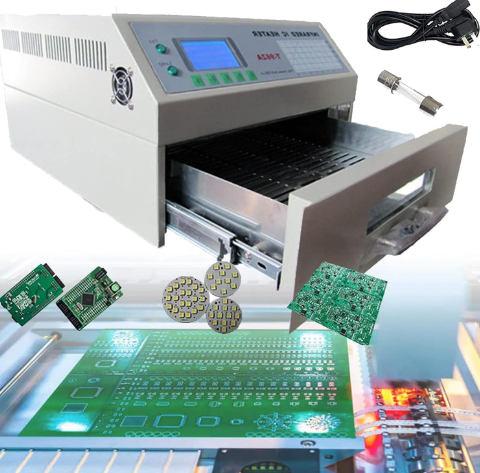
The Importance of Reflow Soldering in Circuit Board Manufacturing
Reflow soldering is essential for modern electronics manufacturing, allowing for the efficient assembly of surface-mount technology (SMT) components onto circuit boards. The reflow circuit board in oven process ensures that solder paste melts uniformly, allowing components to securely bond to the board. The precise temperature control provided by reflow ovens is critical in avoiding defects like cold solder joints or overheating, which can compromise the functionality of the board.
For high-tech companies like Chengliankaida Technology Co., Ltd., which specializes in the development of advanced vacuum welding machines for semiconductor device packaging, the reflow circuit board in oven process is critical for ensuring the reliability of the final product. Understanding the correct reflow temperatures is crucial in industries where the integrity of the solder joints is paramount, such as semiconductor and power device packaging.
The Stages of Reflow Soldering in the Reflow Circuit Board in Oven Process
The reflow circuit board in oven process consists of multiple stages, each requiring specific temperature settings to ensure the optimal soldering of components. These stages include pre-heat, soak, reflow, and cooling. Let’s examine each of these stages in detail:
- Pre-Heat Stage
The first step in the reflow circuit board in oven process is preheating the board to a lower temperature to prepare it for the subsequent stages. During this stage, the circuit board is heated gradually to avoid thermal shock, which could damage components. The pre-heat temperature typically ranges from 120°C to 160°C (248°F to 320°F). At this stage, the solder paste begins to soften and prepare for the soak phase, without causing the solder to melt prematurely.
- Soak Stage
In the soak stage of the reflow circuit board in oven process, the board is exposed to a slightly higher temperature range of 160°C to 180°C (320°F to 356°F). The purpose of this stage is to allow the solder paste to fully activate, ensuring that it wets the component leads and pads properly. The soak stage is critical for uniform heat distribution, ensuring that the entire board reaches a consistent temperature before the reflow stage.
- Reflow Stage
The reflow stage is the most critical part of the reflow circuit board in oven process. During this phase, the solder paste reaches its melting point and begins to form solder joints. This stage requires the highest temperature, typically ranging from 220°C to 250°C (428°F to 482°F). Reflow ovens must maintain this temperature with precision to ensure that the solder paste melts uniformly and forms reliable electrical connections without damaging the components.
It’s during the reflow stage that temperature control becomes most important. If the temperature is too high, it can cause excessive soldering, leading to bridges between pads or component damage. Conversely, insufficient temperature can result in incomplete soldering and poor electrical conductivity. The reflow circuit board in oven process is designed to handle these precise temperature requirements to achieve optimal soldering.
- Cooling Stage
After the reflow stage, the board enters the cooling phase, where the temperature drops rapidly to allow the solder joints to solidify. Cooling is essential to ensure that the solder joints harden properly, preventing defects such as cold solder joints. The cooling stage typically brings the temperature down to 30°C to 50°C (86°F to 122°F), completing the reflow circuit board in oven process.
The Role of Reflow Ovens in Temperature Control
The success of the reflow circuit board in oven process heavily relies on the precision of the reflow oven. Reflow ovens are equipped with advanced temperature control systems that ensure each stage of the reflow process is executed accurately. Reflow circuit board in oven technology is designed to heat the board evenly, preventing localized overheating that can cause damage to the circuit or components.
Advanced reflow ovens, like those used by Chengliankaida Technology, offer multiple heating zones with adjustable temperature profiles. This allows manufacturers to fine-tune the process to meet the specific requirements of the solder paste and circuit board design. For industries where high-quality solder joints are crucial, reflow circuit board in oven systems provide the necessary precision to meet demanding standards.
Factors Affecting the Reflow Temperature in the Reflow Circuit Board in Oven Process
Several factors can influence the temperature requirements during the reflow circuit board in oven process. These include:
- Type of Solder Paste: Different solder pastes have different melting points, and the reflow circuit board in oven process must be tailored to the specific solder used. Lead-free solder paste, for example, requires higher temperatures than traditional lead-based solder.
- Size and Complexity of the Circuit Board: Larger and more complex circuit boards may require longer heating times and slower temperature ramps to ensure uniform soldering. Advanced reflow ovens with multiple temperature zones are ideal for handling such boards.
- Component Sensitivity: Some components are more sensitive to heat and require lower reflow temperatures. In such cases, the reflow circuit board in oven process must be adjusted to ensure that these components are not damaged during the process.
How Reflow Circuit Board in Oven Technology Ensures Quality and Reliability
Reflow circuit board in oven systems are crucial for ensuring that the final product meets the highest standards of quality and reliability. Advanced ovens incorporate various technologies, such as nitrogen environments or infrared heating, to ensure that the soldering process is both precise and efficient. By maintaining strict control over the temperature profiles, these systems reduce the risk of defects, improve production yields, and ensure that circuit boards meet the stringent performance requirements of industries like semiconductors, telecommunications, and consumer electronics.
Conclusion: The Importance of Temperature Control in Reflow Soldering
The reflow circuit board in oven process is essential for achieving high-quality solder joints in circuit board manufacturing. The precise control of temperature during the pre-heat, soak, reflow, and cooling stages is crucial to ensure that components are properly attached to the board without causing damage. Reflow ovens equipped with advanced temperature control systems are essential for achieving consistent and reliable results. For companies like Chengliankaida Technology, which specialize in the development of vacuum welding machines for semiconductor packaging, mastering the reflow circuit board in oven process is vital to ensuring the long-term reliability of their products.
By understanding the critical temperatures involved in the reflow circuit board in oven process and using the right equipment, manufacturers can ensure that their circuit boards are of the highest quality and performance. The role of reflow circuit board in oven technology is indispensable in modern electronics manufacturing, where precision and reliability are paramount.
What is the Difference between Vapor Phase Reflow and Convection Reflow?
What Is a High Temperature Furnace for Sintering?
Related Article

Explore laser packaging process routes for LiDAR and optoelectronics. Discover how vacuum eutectic soldering secures sub-micron alignment stability.
Laser Diode Packaging Technologies: From TO-Can to Silicon Photonics

Compare inline vs. batch vacuum soldering systems. Learn how vacuum reflow ovens optimize void-free welding for high-power semiconductor packaging.
Vacuum Soldering Process & Equipment Comparison: How to Achieve Automotive-Grade Low-Void Manufacturing

