
What Are the Benefits and Advantages of Vacuum Reflow Soldering?
2023-08-02
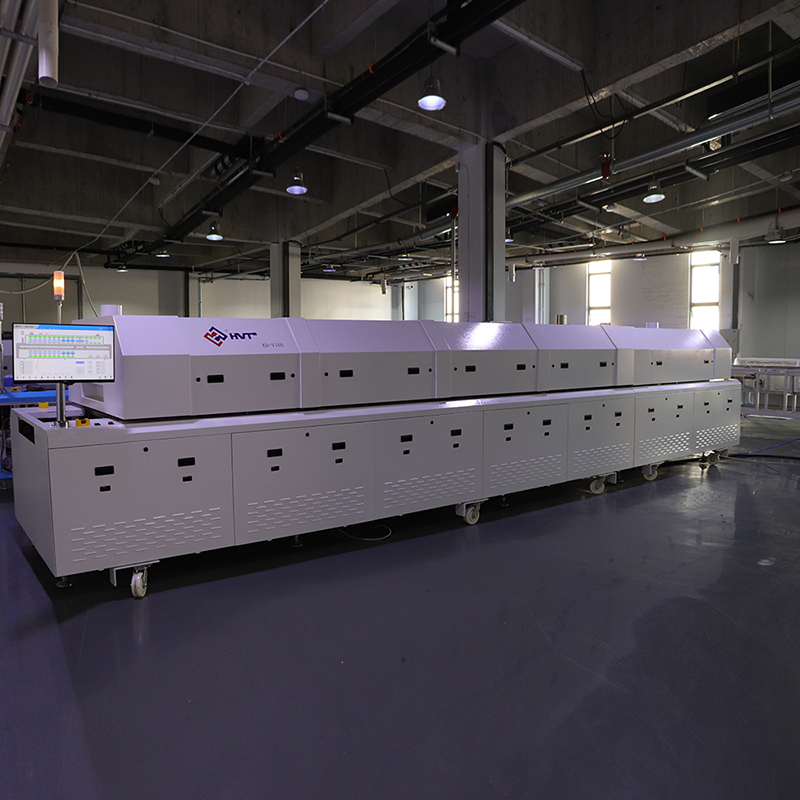
The soldering process is one of the most crucial steps in the manufacturing process, particularly in the manufacturing of electronic devices. It involves joining two or more metal components with an alloy, or solder, which binds them together. As a widely used method in the industry, reflow soldering involves melting solder alloys under controlled conditions in order to create a strong and reliable joint that is able to withstand harsh conditions.
When it comes to vacuum reflow soldering, traditional methods have limitations when it comes to achieving high-quality and consistent results, particularly with advanced electronic components. We will explore the advantages and benefits of vacuum reflow soldering in this article.
What is vacuum reflow soldering?
Vacuum reflow soldering is a specialized soldering process used in electronics manufacturing to join components and circuit boards. Unlike traditional reflow soldering, which takes place in ambient air, vacuum reflow soldering is performed in a controlled vacuum environment. This process offers several advantages, especially for sensitive or high-reliability electronic assemblies.
How vacuum reflow soldering works?
Here's how vacuum reflow soldering works:
- Preparation: The components and circuit boards to be soldered are placed on a specially designed fixture or carrier. The fixture is then loaded into the vacuum reflow soldering machine.
- Vacuum Chamber: The vacuum reflow soldering machine contains a vacuum chamber that can be sealed and evacuated to create a controlled low-pressure environment. The chamber may also be filled with a protective gas, such as nitrogen, to minimize oxidation during the soldering process.
- Heating: The vacuum reflow soldering process involves heating the entire assembly to a specific temperature profile. This temperature profile typically includes preheating to remove moisture and activate flux, followed by a rapid rise to the reflow temperature where the solder paste melts and forms the solder joints.
- Soldering: In the absence of air, the soldering process takes place under reduced pressure. This reduces void formation, improves wetting, and minimizes the risk of solder bridging or other defects.
- Cooling: After the solder has reflowed and formed the desired connections, the assembly is gradually cooled down to solidify the solder joints.
Vacuum reflow soldering is particularly beneficial in applications where void-free soldering is crucial, such as high-power electronics, aerospace components, and medical devices. By eliminating air and reducing voids, the process enhances the mechanical and thermal properties of the solder joints, leading to increased reliability and better electrical performance.
Advantages and benefits of vacuum reflow soldering
Higher Quality and Reliability
As a result of the vacuum environment of the soldering oven, contaminants like oxygen, moisture, and other gases are eliminated. This prevents solder joint defects. Therefore, vacuum reflow soldering produces reliable and high-quality joints free of cracks, holes, or other defects that may compromise electronic device functionality.
Increased Productivity and Efficiency
With vacuum reflow soldering, the solder is heated and cooled faster and more precisely than with traditional reflow soldering methods. This reduces overall processing time because of the vacuum environment. Moreover, the controlled atmosphere prevents defects in the joints, reducing rework and increasing productivity.
Better Control and Consistency
Vacuum reflow soldering is easier to control and consistent. During the melting and cooling process, the vacuum environment ensures a constant and uniform temperature throughout the chamber. Even the most advanced electronic components can be soldered consistently and reliably.
Versatile and Adaptable
Vacuum reflow soldering for electronic components and materials is versatile and adaptable. A variety of solder alloys, including lead-free options, can be used, and components of different sizes and shapes can be accommodated. This makes it an ideal solution for both small- and large-scale production.
Low Maintenance and Environmentally Friendly
Vacuum reflow soldering technology is an environmentally friendly alternative to traditional reflow soldering methods. Equipped with a vacuum option, it is able to effectively eliminate the problems of air holes, holes, and voids that can occur after soldering. By setting the vacuum pressure and vacuum rate separately, it is possible to reduce the void rate down to below 3% when the true air pressure reaches 10 mbar-5 mbar. In addition to making the production process more efficient and reliable, this integrated solution also helps to reduce the cost of the production process, by avoiding excessive rewedding of PCB plates or scraps, as well as minimizing scrapping.
Conclusion
Over traditional reflow soldering methods, vacuum reflow soldering offers several benefits and advantages. In addition to improving quality and reliability, it improves control and consistency, increases productivity and efficiency, and is more environmentally sustainable. As the demand for advanced electronic components grows, vacuum reflow soldering is becoming increasingly critical in the manufacturing industry.
Thank you for reading. If you have questions or would like more information regarding vacuum reflow soldering, please send us an email at wangjiaqin@clkdkj.com. We are always happy to help.
Top 5 Reasons to Use a Vacuum Reflow Oven and Vacuum Soldering Machine
Guide to Selecting Reflow Ovens Based on Their Types, Features, And Applications
Related Article

Explore laser packaging process routes for LiDAR and optoelectronics. Discover how vacuum eutectic soldering secures sub-micron alignment stability.
Laser Diode Packaging Technologies: From TO-Can to Silicon Photonics

Compare inline vs. batch vacuum soldering systems. Learn how vacuum reflow ovens optimize void-free welding for high-power semiconductor packaging.
Vacuum Soldering Process & Equipment Comparison: How to Achieve Automotive-Grade Low-Void Manufacturing

