
The Ultimate Guide to Solder Flux
2023-12-11
When assembling circuit boards, tools and solder are just one part of the equation needed to build reliable and durable electronics. In addition to playing a vital role in preparing the electronic components and PCB surface, flux also aids solder flow, bonds the metal to the pad and component legs to assist in fusing them together, and is another crucial ingredient in the recipe for success.In this comprehensive guide, we'll take you through the ins and outs of solder flux, from its types and applications to advanced techniques.
What Is Solder Flux?
Solder flux is a chemical substance used in soldering to improve the efficiency and effectiveness of the soldering process. It serves several important functions during the soldering of electronic components or other materials. The primary purpose of solder flux is to facilitate the flow of solder and ensure the formation of a strong, reliable bond between the solder and the surfaces being joined.
What Is the Purpose of Flux in Soldering?
Anyone who has attempted to solder components onto a PCB with untinned pads and without flux understands the challenges associated with this process. The solder tends to struggle to adhere to the pads or components, and even if it does, the resulting solder joints are often brittle and of poor quality. Several factors contribute to these issues. For instance, copper pads on the PCB begin to oxidize as soon as they are exposed to air following the etching process. This thin layer of oxidation accumulates on the surface, hindering proper solder adhesion to the copper.
Additionally, various solder formulations may make it difficult for the solder to bond effectively to the copper or gold-plated legs of components.
This is where flux becomes crucial. Flux, a chemical product, plays a key role in preparing the surfaces on the PCB by eliminating oxidation and promoting surface wetting. Furthermore, flux facilitates the creation of a genuine metallurgic bond between the PCB's pads and component legs. This ensures that solder joints remain intact even when subjected to thermal and physical stress. Importantly, flux also acts as a preventative measure against new oxidation formation during the high-heat soldering process, which would typically accelerate the oxidization process. In summary, flux is essential for enhancing soldering performance, promoting reliable bonds, and preventing the formation of detrimental oxidation during the soldering process.
Types of Soldering Flux in Electronics
Similar to solder, the types of flux commonly used in electronics assembly can be distinguished based on the underlying chemicals used to create them. The primary categories are rosin-based flux, no-clean flux, and water-soluble flux. Additionally, flux can be classified according to its delivered form, such as spray, liquid, paste, or as a core embedded within the solder.

1.Rosin-Based Flux
Rosin-based flux is crafted from pine tree sap and dissolved in a solvent, often isopropyl alcohol. The resulting product is slightly acidic, aiding in the dissolution of accumulated debris and oxidation. In its initial state, it's referred to as type-R rosin flux. Manufacturers can enhance its aggressiveness by adding acid activators, making it more effective in dissolving heavier oxide films, especially when soldering at higher temperatures, such as with lead-free solder. Depending on the activation level, it is categorized as RMA (rosin mildly activated) and RA (rosin activated). Due to its acidic nature, type-R rosin flux needs to be cleaned off the PCB after assembly to prevent corrosion over time.
2.No-Clean Flux
No-clean flux is essentially a rosin flux with minimal activation, eliminating the need for chemical removal post-assembly. However, due to reduced acidity, this flux is less efficient in preparing surfaces for soldering and may not be suitable for higher-temperature applications. Although cleaning is not mandatory, it is still recommended, as no-clean flux can leave a sticky residue that may attract dust, potentially leading to hardware failures in sensitive components over time.
3.Water-Soluble Flux
Water-soluble flux utilizes synthetic resins, striking a balance between no-clean flux and type R flux. It remains corrosive enough to prepare clean soldering surfaces effectively. After assembly, it must be rinsed off the board using de-ionized water instead of chemical solvents, providing a less messy and more cost-effective cleanup process. Some water-soluble flux formulations are mostly water-based, reducing harmful emissions during soldering and promoting a safer environment for workers.
How to Use Solder Flux?
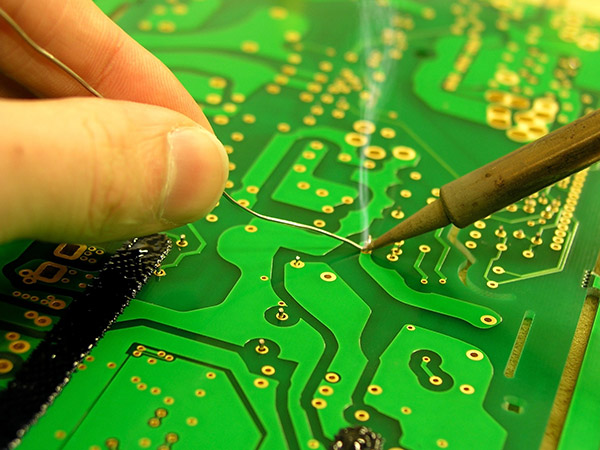
Integrating solder flux into your PCB assembly isn’t just a best practice—it’s essential for robust, reliable connections. Here’s how to do it right:
Step 1: Pick Your Flux
First, examine your PCB. Is it single-sided, double-sided, or multilayer? What soldering method will you use: Wave Soldering, Hand Soldering, or SMT? Your answers guide your choice of flux, helping you nail down the one that works best for your project.
First, examine your PCB. Is it single-sided, double-sided, or multilayer? What soldering method will you use: Wave Soldering, Hand Soldering, or SMT? Your answers guide your choice of flux, helping you nail down the one that works best for your project.
Step 2: Clean Up
Before delving into soldering, eliminate all surface impurities. Swipe an appropriate solvent across your PCB pads and component terminals to remove unwanted particles and oxides.
Before delving into soldering, eliminate all surface impurities. Swipe an appropriate solvent across your PCB pads and component terminals to remove unwanted particles and oxides.
Step 3: Apply the Flux
With a clean surface, the next step is applying the flux. Use a steady hand to spread a uniform layer over the areas you’ll solder.
With a clean surface, the next step is applying the flux. Use a steady hand to spread a uniform layer over the areas you’ll solder.
Step 4: Heat Things Up
Time to power on your soldering iron. Let it reach its optimal operating temperature. Then touch the tip to the flux-covered pads. This step activates the flux and clears the area of remaining oxidation, setting the stage for soldering.
Time to power on your soldering iron. Let it reach its optimal operating temperature. Then touch the tip to the flux-covered pads. This step activates the flux and clears the area of remaining oxidation, setting the stage for soldering.
Step 5: Execute the Solder
With an activated flux layer, it’s go-time. Introduce the solder wire to your joint and make sure it flows smoothly to cover both the PCB pad and the component leg. The goal? A solid, unshakeable connection.
With an activated flux layer, it’s go-time. Introduce the solder wire to your joint and make sure it flows smoothly to cover both the PCB pad and the component leg. The goal? A solid, unshakeable connection.
Step 6: Clean the Scene
Soldering can be messy, and leftover flux residue may compromise your PCB's performance. For non-"no-clean" fluxes, cleanup is imperative. Utilize an appropriate solvent to eliminate all residue, ensuring a clean and functional PCB.
Soldering can be messy, and leftover flux residue may compromise your PCB's performance. For non-"no-clean" fluxes, cleanup is imperative. Utilize an appropriate solvent to eliminate all residue, ensuring a clean and functional PCB.
As we conclude, it's crucial to underscore the indispensable role of solder flux in PCB assembly. It's not merely a cleaner; it's a performance enhancer. By removing oxides from electrical contacts and preparing the PCB surface, solder flux lays the groundwork for a robust metal-to-metal bond.
When collaborating with an EMS provider, bear in mind that the right flux can significantly impact outcomes. Your choice will influence everything from material compatibility to long-term reliability. Choose wisely to ensure your soldering results in a durable and high-performing PCB.
Basic Principles of SMT Vacuum Reflow Oven
The Ultimate Guide to Infrared Reflow
Related Article

Explore laser packaging process routes for LiDAR and optoelectronics. Discover how vacuum eutectic soldering secures sub-micron alignment stability.
Laser Diode Packaging Technologies: From TO-Can to Silicon Photonics

Compare inline vs. batch vacuum soldering systems. Learn how vacuum reflow ovens optimize void-free welding for high-power semiconductor packaging.
Vacuum Soldering Process & Equipment Comparison: How to Achieve Automotive-Grade Low-Void Manufacturing

