
Guide to Selecting Reflow Ovens Based on Their Types, Features, And Applications
2023-07-26
An overview of reflow ovens
A reflow oven heatsnents to be mounted to printed circuionboards (PCBs) using surface mount technology. It has become a standard of the electronics manufacturing industry because SMT offers the advantage of simplifying the construction of electronic devices, and reflow ovens come in a wide range of sizes and types. Commercial reflow ovens range in cost from thousands to tens of thousands of dollars. Homemade reflow ovens are cheaper to construct, but they are less durable and functional.
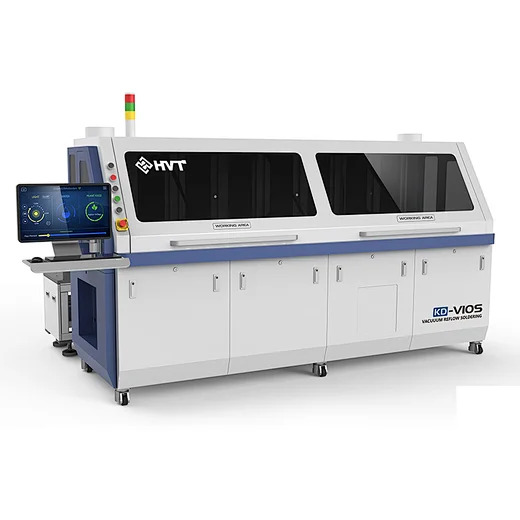
Reflow ovens were invented to solve the problem of manual soldering of electronic components to printed circuit boards that consumed excessive amounts of time. As a result of their high thermal transfer efficiency, modern convection reflow ovens feature shorter profiles and more heating than earlier models.
A typical reflow solder process involves melting a paste of solder and flux between electronic components and printed circuit boards to form a permanent bond. The process begins by laying a stencil with holes cut out for individual pads over a PCB. This PCB is then coated with solder paste using a screen printer. Once electronic components are placed on the PCB, component leads are aligned with solder paste pads using a pick and place machine or other placement equipment. After the paste has been heated and cooled, it forms a permanent bond between the PCB and the components. After cleaning, testing, packaging, and further assembly, the board can be completed.
Typically, reflow soldering involves following a temperature profile that describes the optimal rate of heating and cooling that the solder paste and its components should run through during the soldering process. The four main zones of a thermal profile are preheating, soaking, preflow,ow, dryout, reflow,ws, and cooling.
- In the preheating zone, the assembly is heated between 1 and 4°C to temperatures between 100 and 150°C at a controlled rate.
- A soak zone maintains a constant temperature between 150°C and 170°C for up to two minutes. This is to allow fluxes to activate and stabilize the temperature throughout the system.
- In the reflow zone, the solder is heated to a temperature higher than its melting point for 30 to 60 seconds in order to ensure full reflow of each solder lead.
- Cooling zones lower the temperature at a controlled rate between 1 and 4°C to ensure that solder interconnections between components and the board are of ideal grain size and strength.
The types of reflow ovens
There are various types of reflow ovens, but the most common type is an infrared convection oven. This type of oven uses infrared radiation to transfer heat from the heating elements to the components and solder, and fans are used to increase the speed of heat transfer.
In vapor phase ovens, the PCB is immersed in a layer of vapor during the soldering process. Liquid perfluoropolyether is boiled to create a layer of vapor in which the PCB is immersed.
Compared to convection ovens, vapor phase ovens provide better heat transfer efficiency, which lowers power consumption. Furthermore, they have a small physical footprint and can improve solder wetting. Due to their batch process nature, they are ideal for low volume production. However, vapor phase ovens can be more expensive due to the cost of specialized vapor materials.
There are three main types of reflow ovens: benchtop reflow ovens, batch reflow ovens, and in-line conveyor reflow ovens.
Specifications
There are many features available in today's reflow ovens, depending on their intended use, production duration, and intended result. It is important to consider all factors that affect the production process when selecting a reflow oven. The following criteria can be helpful:
- Thermal performance
- Reflow oven type
- Maximum temperature rating
- Throughput
- Heating technology
- Entrance clearance
- Speed of conveyor
- Maximum PCB width and height
- Process gas
- Conveyor design
- Computer software and PC interface
- Software
- Power supply
- Serviceability
- Maintenance downtime
- Reliability
You can make your own reflow oven from household appliances, like toasters or microwaves, which use infrared rays to heat things. There are, however, drawbacks to using a homemade reflow oven. Homemade reflow ovens don't allow you to create a proper profile or establish cooling methods. They are only suitable for simple, small jobs, not ongoing, larger ones.
Applications
There are several ways to use reflow soldering to attach components to a circuit board, a method that is also used for attaching through-hole components (THTs). However, wave soldering is more simple and less expensive when it comes to pure through-hole boards. However, a reflow oven can be used to reduce the assembly costs of boards that contain both through-hole and surface mount components. It helps in the protection of electrical components by preventing the possibility of damage occurring during the process of soldering, which could otherwise be caused by overheating.
Profiling
In thermal profiling, several points on a circuit board are measured to determine the ideal rate at which heat and cooling should be applied to prevent defects. Thermal temperatures in an oven are measured using a complex set of time and temperature data. These data define ramp-soak-spike or ramp-spike profiles. Using ramp, soak, and spike, we can determine the temperatures that change the structure of solder and how long it takes for it to happen.
Ensure proper reflow oven profiling can help avoid costly production issues such as weak joints caused by improper profiling. Incorrect temperature settings can damage components as they are heated and cooled at too high a rate.
Standards
The reflow oven is an excellent choice when it comes to a variety of soldering needs. Optimum results can be achieved by determining all aspects of the product characteristics such as the type of component, solder requirements and board requirements, volume, pace, size, and thermal requirements.
What Are the Benefits and Advantages of Vacuum Reflow Soldering?
The detail about the IGBT power device package
Related Article

Explore laser packaging process routes for LiDAR and optoelectronics. Discover how vacuum eutectic soldering secures sub-micron alignment stability.
Laser Diode Packaging Technologies: From TO-Can to Silicon Photonics

Compare inline vs. batch vacuum soldering systems. Learn how vacuum reflow ovens optimize void-free welding for high-power semiconductor packaging.
Vacuum Soldering Process & Equipment Comparison: How to Achieve Automotive-Grade Low-Void Manufacturing

